Lawn care tips from Heinen Landscape for thriving turf all summer long!
As the seasons change, so do the needs of your lawn to stay hardy and healthy. Spring’s increased rain and cooler temperatures provide the perfect conditions for turf growth, but the heat of summer definitely can put grass through its paces. Hot weather and low precipitation can damage lawns that are not properly prepared and regularly cared for. Fall and winter weather bring along their own seasonal challenges as well.
Want your best lawn this year? Follow the recommendations from the Turf pros at Heinen (below) to achieve your best lawn ever!
What is the best way to keep grass healthy during the summer?
Consistent watering is the first key to keeping lawns green and healthy all summer long.
Even first-time homeowners know that regularly watering the lawn is an important element of having better grass. It also doesn’t take a first-time homeowner long to learn that watering by hand is tedious, time-consuming, inefficient, and inconvenient. Waking up at dawn, prime time for watering, quickly makes an already tiresome task even more so, and making sure that every blade of grass receives the right amount of water is all but impossible, no matter how often the hose and sprinklers are moved ’round and ’round the lawn.
The most effective solution? An automated underground irrigation system. The cost is certainly more than a few hoses and sprinklers, but it’s an investment that pays off for decades in time saved – and even adds value to your property when the time comes to sell your home.
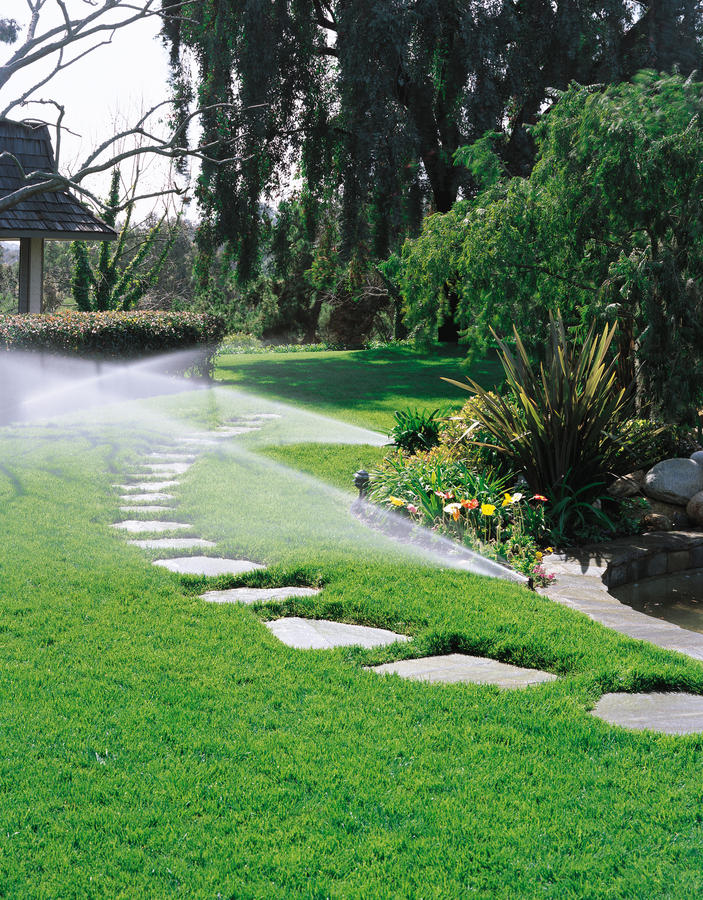
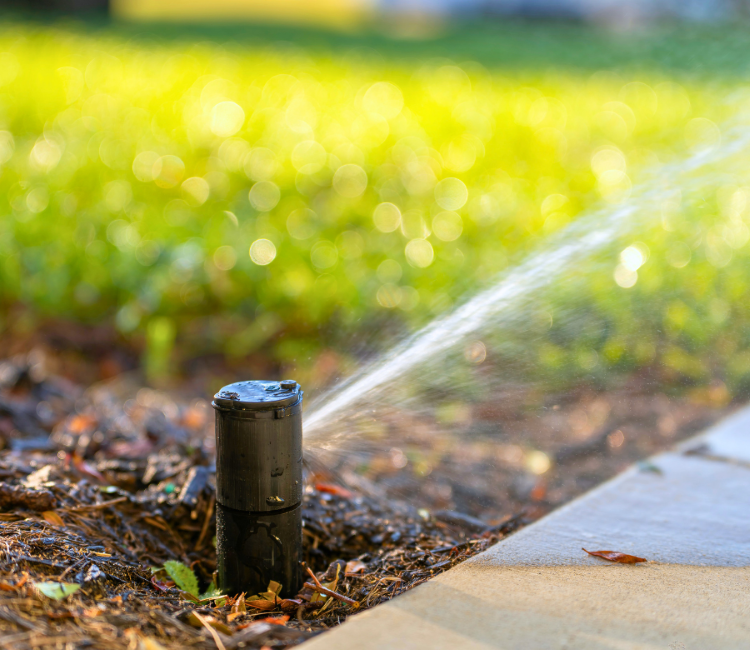
Consistent watering is key to a healthy summer lawn, and automated watering systems make that easy and efficient.
And when it comes to getting just the right sprinkler system, the irrigation specialists at Heinen have over 40 years of experience in designing and installing thousands of underground watering systems that perform at peak efficiency for years and years to come. Heinen partners with the industry’s most reliable suppliers, like Hunter, Rain Bird, and Rachio, that carry the most dependable system components along with advanced sprinkler system controllers – even wi-fi controllers that allow watering schedules to be adjusted from anywhere in the world. Smart technology-enabled controllers also allow data interaction with the National Weather Service’s local reporting stations to avoid over- or under-watering.
When is the best time to water the lawn?
It’s best to water the lawn during the early morning hours, especially during the summer.
It’s a natural inclination to want to water a lawn during the hottest part of the day, as it might seem that’s when grass would be the thirstiest. However, the hot sun during those hours evaporates away moisture before the soil has a chance to absorb it, leaving the turf dry and undernourished.
The most effective time to water is just before the sun rises. This allows moisture ample time to be fully absorbed into the soil and nourish plant root systems, and excess water evaporates as the sun rises. This is also why watering should not take place after the sun goes down. Water that is not absorbed is left to sit on the lawn for too long, which can lead to issues with fungal disease later.
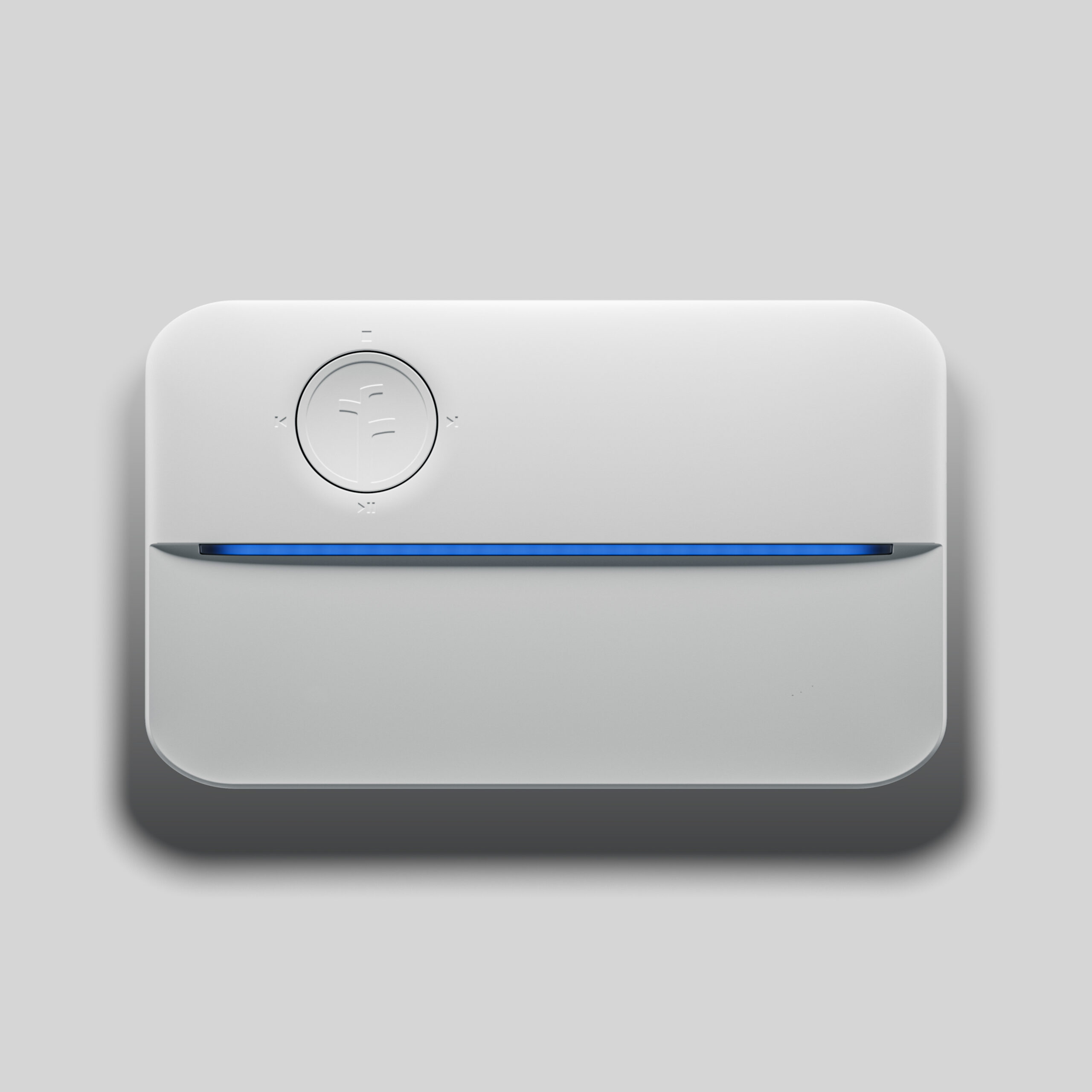
The Rachio 3 smart controller uses real-time weather data to prevent overwatering.
How do smart controllers improve lawn health?
Smart controllers improve lawn health by delivering the exact right amount of water based on real-time conditions.
Traditional sprinkler system controllers operate on fixed, time-based schedules that open valves for each zone at specific times for a set amount of time. While this does provide regularity, it does not allow the watering schedule to be fine-tuned, which creates opportunities for water waste to occur.
Smart controllers control water usage by monitoring local weather conditions in real time. This allows the controller to optimize the timing of irrigation and prevent overwatering. This means that sprinklers will not kick on while it’s raining or after the storm has passed because the controller has determined that the lawn has been adequately hydrated. Best of all, this all occurs automatically, so homeowners don’t need to do anything more than wait for updates from the smart controller via a dedicated smartphone app.
What lawn treatments does my lawn actually need?
The best treatments for a lawn are determined by what kind of nutrients it needs, the type of grass, the lawn’s current condition, and seasonal factors.
No one set of lawn treatments will be effective for every single property. Every lawn has its own combination of soil conditions, grass types, sun exposure, and drainage patterns. Some lawns struggle with excessive weeds or thinning patches, while others face more serious issues like fungal diseases or insect damage.
Because of this, lawn specialists, like the team at Heinen, have several different lawn treatment options designed to combat these issues. Fertilization, grassy weed and broadleaf weed control, fungicide applications, insect control, and soil conditioning all serve different purposes to improve overall lawn health. Even after the treatment needs of a lawn are determined, lawn pros know which products will work best for the issue and typically have access to higher-quality versions than those available at the big box stores. They also have a thorough understanding of which products can be paired together and which should not be combined.
Heinen’s team of lawn specialists analyzes each client’s lawn carefully and applies only the necessary treatments to improve and sustain lawn health for the upcoming season. Once completed, Heinen provides the homeowner with a detailed breakdown of the treatments so they know exactly what was used on the lawn.
What is verticutting, and how does it help the lawn?
Verticutting removes excess thatch from the lawn so that water, air, and nutrients can better reach grass root systems.
Verticutting (also known as dethatching) is a lawn care treatment performed by a specialized machine that looks similar to a push lawn mower but with vertical blades. The blades slice into the grass and remove thatch, the layer of dead grass, roots, and other organic plant debris that builds up between the surface of the soil and grass blades. Some thatch is beneficial for the lawn, but when it becomes more than an inch thick, it can become an issue.
Excessive thatch acts as a barrier, blocking water and nutrients from reaching turf roots. This weakens the lawn over time and makes it more susceptible to pests, weeds, and diseases. Removing thatch regularly allows water to fully absorb into the soil, leading to stronger, deeper root systems. Fertilizer treatments are also more effective after verticutting. Homeowners find that verticutting at least once a year helps eliminate bare spots and encourages grass to grow in thicker and healthier.
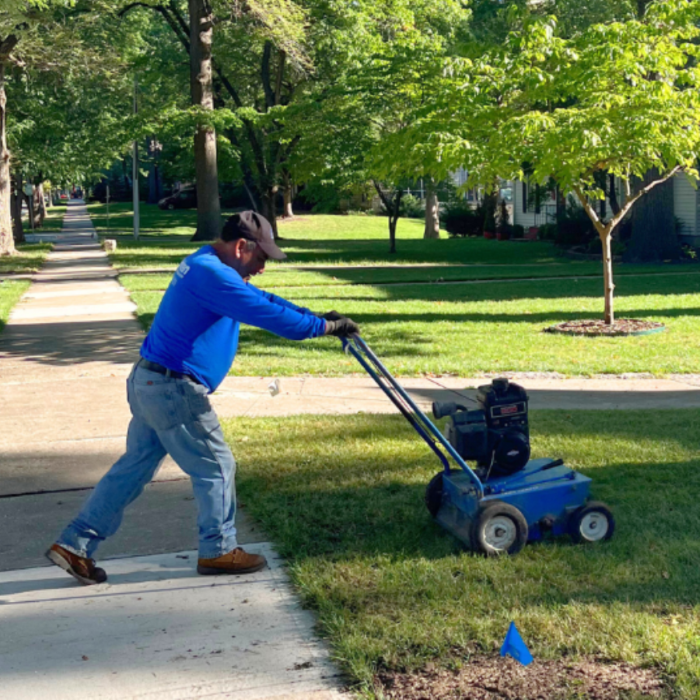
The lawn specialists at Heinen can help you determine how often your lawn needs verticutting performed.
Verticutting is best done by lawn care pros, like the team at Heinen. Heinen’s lawn specialists use commercial-grade verticutting machines for more effective thatch removal without overstressing the lawn or thinning out the grass too much. If dethatching is overdone, grass can go into shock and soil can be overexposed, leaving the door open for weeds or disease. For the best results, Heinen typically recommends verticutting to be paired with other lawn treatments, like overseeding or fertilizing.
What is the benefit of using mulch in landscape beds?
Mulch locks in moisture, boosts soil quality, and improves plant health for healthier, longer-lasting landscapes.
Mulch serves several purposes beyond giving landscapes a clean and polished appearance – although it certainly is a bonus! Mulch is essential for landscape beds and large plantings, especially during seasons with drought-like conditions, like summer and winter. It helps retain moisture and effectively directs it to plant root systems before it can evaporate away. Mulch also works as an insulator and keeps soil temperatures cooler, which significantly benefits root systems. Over time, mulch eventually breaks down, but this is also a great benefit to the soil. This adds back in nutrients and helps improve water absorption in soils with high levels of clay or sand.
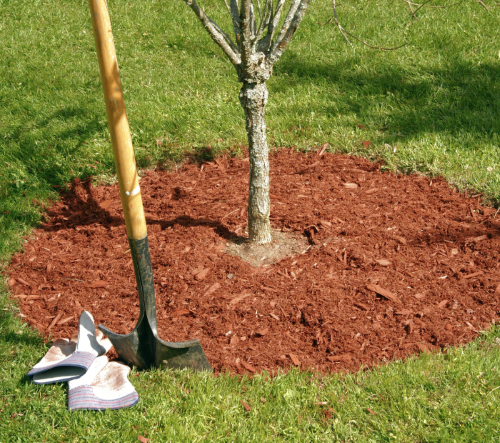
Mulch should form a donut shape around the base of the tree without touching the bark.
And mulch is not just beneficial for landscape and garden beds – it also plays a key role in preserving tree health. Grass around the base of trees should be removed so that the tree does not have to compete with it for nutrients. If left bare, the soil above the tree roots will erode away, eventually exposing them. Mulch should be applied around the base of the tree to prevent erosion and keep roots hydrated. When placing mulch around a tree, make sure to leave a 6-12 inch gap around the base. If mulch is piled up on the base of a tree and is touching the bark, it can lead to disease and rot.
Before applying mulch, make sure all weeds are removed, and the area is thoroughly watered. Finer mulches should be applied about 2 inches thick, while coarser mulches should be applied around 4 inches thick.

Be the Envy of Your Neighbors this Summer – with a little help from the outdoor pros at Heinen!
Heinen’s experienced team of irrigation specialists has designed, installed, and maintained sprinkler systems for home and business owners for over 40 years. Keep lawns looking their year-round best with custom-built irrigation systems from KC’s leading irrigation crew. And if you are in need of more comprehensive lawn and landscape care services, such as fertilizing or verticutting, the Heinen team is always ready to assist.